
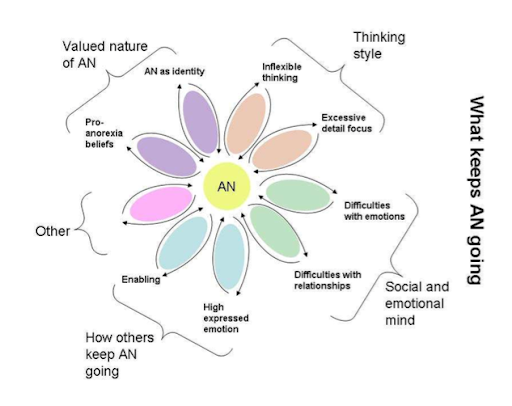
The Vicious Flower of Anorexia
No two people are exactly the same. This is also true of people with anorexia. However, there are some common factors that we know tend to maintain anorexia. These are highlighted in the ‘vicious flower’ model of anorexia (Schmidt et al., 2011). This can be a useful way of understanding what is maintaining your eating disorder, which is a crucial step in recovery.

People with anorexia tend to have both positive and negative beliefs about their illness. Many people find it difficult to contemplate “letting go” of anorexia because they believe that it serves a useful function in their life and/or has become an important part of their identity. In this way, anorexia is valued and maintained.
A lot of people with anorexia have difficulties with emotions. For example, they may have difficulties identifying, understanding and/or expressing emotions – especially when emotions are experienced as negative or overwhelming. We know that people with anorexia tend to “bottle up” their emotions in order to avoid upsetting others or getting into conflict. Unfortunately, this means that any negative emotions experienced tend to build up, meaning that anorexia is required to an even greater extent to help cope with this build-up of emotions.
Different people have different ways of thinking or “thinking styles”. People with anorexia tend to be very rigid and inflexible in their thinking. They are overly focused on details and may struggle to see the “bigger picture”. Additionally, they may experience a lot of anxiety about making mistakes because they hold themselves to excessively high standards. These unhelpful thinking styles tend to be exacerbated by the effects of starvation on the brain, thereby creating a vicious cycle which keeps anorexia going.
Close family, partners and friends are usually concerned about anorexia and want to help. However, they can also play a role in maintaining anorexia by responding in ways which are not so helpful. They may get overly anxious or even angry. Alternatively, they may be overly accommodating, for example, accepting everything the person with anorexia says or does instead of supporting them to challenge their disordered thoughts and behaviours. In this way, close others may inadvertently reinforce anorexia, without intending to.
In addition to the above, there may be other specific or personal factors keeping you stuck with anorexia. Your therapist will help you to identify all relevant factors and address these in treatment.